Search
Showing results for "1"


Research
The human milk microbiome is minimally associated with breastfeeding practicesThe human milk microbiome is dominated by typical oral and skin bacteria, suggesting that bacterial communities from the infant mouth and maternal skin contribute to the development of the human milk microbiome. It is postulated that breastfeeding characteristics, such as breastfeeding frequency and duration, could lead to different levels of exposure to oral and skin bacteria, and subsequently, altered bacterial profiles in human milk.
Our study investigated the quality of measurements obtained using the Rett Syndrome Gross Motor Scale.
Research
Fatal Perinatal Mitochondrial Cardiac Failure Caused by Recurrent De Novo Duplications in the ATAD3 LocusIn about half of all patients with a suspected monogenic disease, genomic investigations fail to identify the diagnosis. A contributing factor is the difficulty with repetitive regions of the genome, such as those generated by segmental duplications. The ATAD3 locus is one such region, in which recessive deletions and dominant duplications have recently been reported to cause lethal perinatal mitochondrial diseases characterized by pontocerebellar hypoplasia or cardiomyopathy, respectively.
Research
Network using Michaelis–Menten kinetics: constructing an algorithm to find target genes from expression dataWe derived a simple ordinary differential equation-based model using Michaelis–Menten Kinetics to process the microarray data
Research
Measuring early childhood development with The Early Human Capability Index (eHCI): a reliability and validity study in ChinaWith the importance of early childhood development more recognized by the international society, low-cost and cross-culturally comparable measures of early childhood development is in great demand, both in China and worldwide. In this study, we aim to test the psychometrics of the Chinese version of The Early Human Capability Index (eHCI), which is designed as a measurement for school readiness in large population.
Research
Process evaluation of a randomised controlled trial intervention designed to improve rehabilitation services for Aboriginal Australians after brain injury: the Healing Right Way TrialHealing Right Way (HRW) aimed to improve health outcomes for Aboriginal Australians with stroke or traumatic brain injury by facilitating system-level access to culturally secure rehabilitation services. Using a stepped-wedge randomised controlled trial design, a two-pronged intervention was introduced in four rural and four urban hospitals, comprising cultural security training for staff and training/employment of Aboriginal Brain Injury Coordinators to support Aboriginal patients for 6-months post-injury.
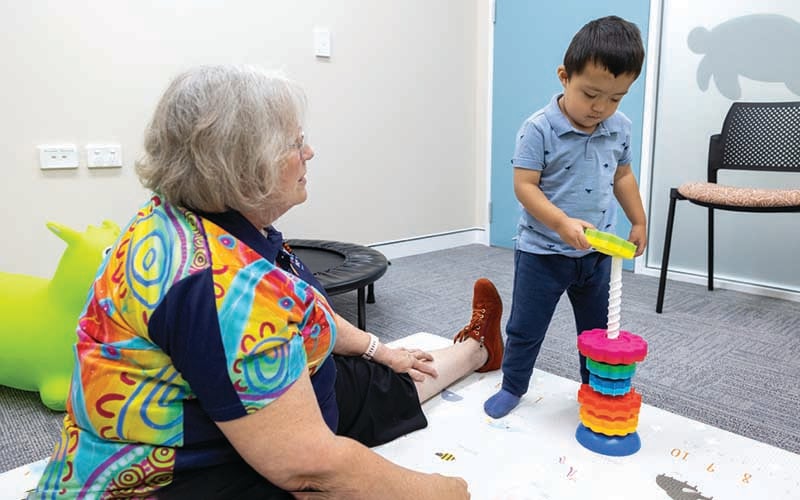
Discover how this family is benefitting from CliniKids' evidence-based therapies.
Research
Improving compliance with swallowing exercise to decrease radiotherapy-related dysphagia in patients with head and neck cancerDysphagia, one of the most common complications in head and neck cancer (HNC) treated with radiotherapy, can severely affect patients’ quality of life. Currently, because no “gold standard” treatment exists, swallowing exercise remains the main rehabilitation strategy for dysphagia. However, patients’ compliance with long-term swallowing exercise is only 40%, thus, greatly compromising outcomes. This article aims to analyze thefactors influencing swallowing exercise compliance in patients with HNC and explains strategies developed to date for improved rehabilitation outcomes.