
Search
Showing results for "early lung health"
News & Events
CF Awareness MonthInformation about cystic fibrosis awareness month and CF research at The Kids
Research
Research Note: Adaptive trialsThis Research Note has explored the strengths, risks and potential complexity of adaptive trials
Research
The cumulative effect of inflammation and infection on structural lung disease in early cystic fibrosisPulmonary inflammation in surveillance bronchoalveolar lavage has a cumulative effect on structural lung disease extent, more so than infection
Research
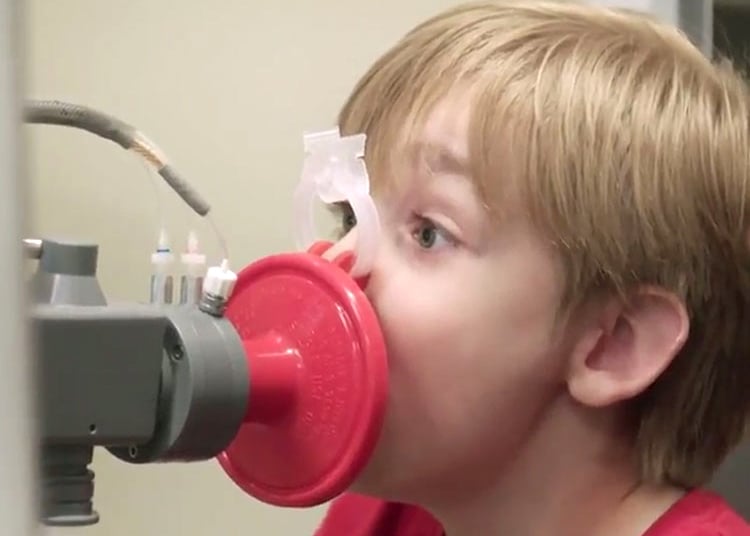
PREDICT CF: Assessing the role of lung clearance index in predicting disease progression in children with cystic fibrosisThere is increasing evidence that the assessment of ventilation distribution using the multiple breath washout (MBW) technique is sensitive to changes in disease status of children with cystic fibrosis.
Research
Elevated leukotriene B4 and 8-isoprostane in exhaled breath condensate from preterm-born infantsInflammation and oxidative stress play a key role in the development of bronchopulmonary dysplasia (BPD), possibly contributing to persistent respiratory morbidity after preterm birth. We aimed to assess if inflammatory markers were elevated in exhaled breath condensate (EBC) of infants born very prematurely (< 32 weeks gestation) at 12-16 corrected months of age, and if increased levels were associated with BPD diagnosis and respiratory morbidity.
Research
Consensus statement for inert gas washout measurement using multiple- and single- breath testsInert gas washout tests, performed using the single- or multiple-breath washout technique, were first described over 60 years ago.
Research
Wet CoughA wet cough in a child for more than four weeks could indicate infection in the lungs. The wet cough is caused by mucus in the airway. The mucus becomes infected with bacteria and causes airway inflammation that can progress to permanent lung damage known as bronchiectasis.

Research
Using syringe infusion pumps Springfusors for the administration of intravenous antibiotics for children with CF at PCH (SIPS-CF)André Schultz MBChB, PhD, FRACP Head, BREATH Team Head, BREATH Team Prof André Schultz is the Head, BREATH Team at The Kids Research Institute
Research
Upper Airway Pathology Contributes to Respiratory Symptoms in Children Born Very PretermThe upper airway may play a role in the respiratory symptoms experienced by some very preterm children and should be considered by clinicians