
Search
Showing results for "aboriginal respiratory"

Inviting expressions of interest for the INSPIRE Consumer Reference Group (CRG) of WA – a group for the Aboriginal Children’s Excellent (ACE) Lung Health studies.
Research
Predicting long term lung health outcomes in young adults born very preterm (WALHIP 19 year old follow-up)This study will conduct a detailed lung health assessment in a follow-up of a group of preterm individuals at 19 years of age.
News & Events
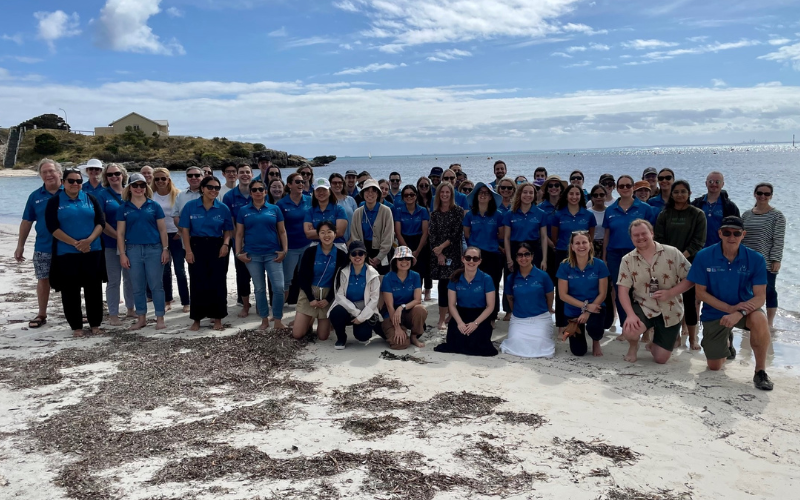
Wal-yan Scientific Retreat: Fostering Collaborative ExcellenceThe Wal-yan Respiratory Research Centre's dedicated team members, along with special guests, embarked on a journey to Wadjemup (Rottnest Island) on 9 and 10 November.
Research
Impact of lung disease on respiratory impedance in young children with cystic fibrosisThe present study investigated whether lung function measured by forced oscillation technique would be impaired in the presence of infection,...
Research
Side effects of medications used to treat childhood interstitial lung diseaseInterstitial lung disease in children comprises a range of different rare diseases
Research
Early respiratory infection is associated with reduced spirometry in children with cystic fibrosisWe hypothesized that the presence of these markers of cystic fibrosis lung disease in the first 2 years of life would be associated with reduced lung...
Research
Structural determinants of long term functional outcomes in young children with cystic fibrosisChest CT identifies children at an early age who have adverse long-term outcomes

News & Events
NHMRC funding boost to child health researchThe Kids researchers will use nearly $8.5 million awarded by the National Health and Medical Research Council (NHMRC) to tackle health issues including respiratory disease, brain cancer, vaccination and Aboriginal health.
Research
Implementation of on-line training modules in paediatric Aboriginal lung healthAndré Schultz MBChB, PhD, FRACP Head, BREATH Team Head, BREATH Team Prof André Schultz is the Head, BREATH Team at The Kids Research Institute
Research
Pulmonary Gas Exchange Improves over the First Year in Preterm Infants with and without Bronchopulmonary DysplasiaRight shift of the peripheral oxyhaemoglobin saturation (SpO2) versus inspired oxygen pressure (PIO2) curve is a sensitive marker of pulmonary gas exchange. The aim of this study was to assess the impact of prematurity and bronchopulmonary dysplasia (BPD) on gas exchange and right-to-left shunt in the neonatal period, and its evolution over the first year of life.