
Search
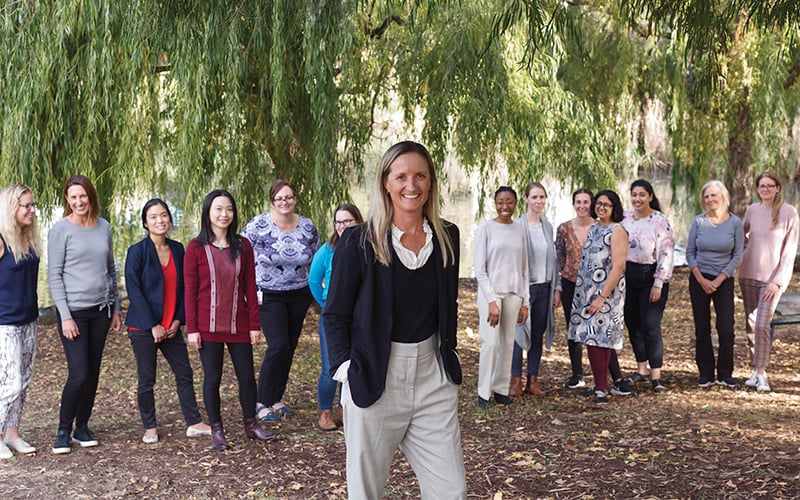
The Kids Research Institute Australia researchers are urging governments to listen more to what kids need.
Research
Long-term employment among people at ultra-high risk for psychosisWe sought to investigate the long-term unemployment rate and baseline predictors of employment status at follow-up in a large ultra-high risk cohort.
Research
Nurses are underutilised in antimicrobial stewardship - Results of a multisite survey in paediatric and adult hospitalsNurses consider antimicrobial stewardship activities within their roles, but are underutilised in antimicrobial stewardship programs
Research
A comparative molecular and 3-dimensional structural investigation into cross-continental and novel avian Trypanosoma spp. in AustraliaHere, we confirm four intercontinental species of avian trypanosomes in native Australian birds, and identify a new avian Trypanosoma.
Research
Maltreatment risk among children with disabilitiesSupports are needed for families with children with disabilities to assist in meeting the child's health and developmental needs, but also to support the parents in managing the often more complex parenting environment.

An interactive Child Development Atlas is giving policymakers, planners and services easy access to important data about the health and wellbeing of WA families.
Research
A Comprehensive Needs Assessment Tool for Planning Rheumatic Heart Disease Control Programs in Limited Resource SettingsRHD is an important cause of disability and death in low- and middle-income countries.
Research
A qualitative investigation of recovery after femoral fracture in Rett syndromeThis study used qualitative methods to investigate the regaining of mobility in 12 months following fractures in Rett syndrome and parent caregiver experiences.
Research
Cord blood Streptococcus pneumoniae-specific cellular immune responses predict early pneumococcal carriage in high-risk infants in Papua New GuineaWe aimed to explore whether newborns in high-risk areas have pre-existing pneumococcal-specific cellular immune responses that effects early acquisition.
Research
The Prevalence of Stimulant and Antidepressant Use by Australian Children and AdolescentsA minority of 4- to 17-year-olds with ADHD and major depressive disorder were being treated with stimulant or antidepressant medication

In early 2021, The Kids Research Institute Australia researcher Dr Amy Finlay-Jones led a global team in trying to answer that question to help better prioritise mental health spending.
Research
Sex differences in the association of phospholipids with components of the metabolic syndrome in young adultsThe aim of this study was to identify sex-specific differences in the metabolome and its relation to components of the metabolic syndrome in a young adult population
Research
Mapping Bacillus Calmette-Guérin vaccination coverage in Africa from 1990 to 2022: a novel spatiotemporal modelling studyBacillus Calmette-Guérin (BCG) protects children from severe tuberculosis and remains the only licensed vaccine for tuberculosis. Subnational estimates of BCG coverage are essential for identifying underserved populations across Africa. This study aimed to map BCG vaccination coverage in Africa from 1990 to 2022.
Research
Facilitating Empowerment and Self-Determination Through Participatory Action ResearchThis article details the application of the participatory action research approach by the National Empowerment Project, Aboriginal community-based researchers.
Research
What goes up must come down: dynamics of type 1 interferon signaling across the lifespanType 1 interferons (T1IFNs) are typically expressed in low concentrations under homeostatic conditions, but upon pathogenic insult or perturbation of the pathway, these critical immune signaling molecules can become either protectors from or drivers of pathology. While essential for initiating antiviral defense and modulating inflammation, dysregulation of T1IFN signaling can contribute to immunopathology, making it and its associated pathways prime targets for immune evasion and disruption by pathogens.
Research
A Scoping Review of Digital Interventions Targeting Anxiety in Young ChildrenAnxiety is a leading mental health concern in childhood. Whilst a range of therapeutic approaches effectively reduce anxiety in young children, several barriers impact their implementation into practice. Digital interventions could help overcome some of these challenges; however, whether these can effectively target anxiety for children with and without Neurodevelopmental Conditions is unknown.
Research
Internalizing Symptoms in Men: The Role of Masculine Norms, Alexithymia, and Emotion RegulationMasculine norms influence internalizing problems in men. The processes that explain this association are not yet comprehensively understood. However, there exists a compelling argument to highlight the role of emotional functioning in explaining how conformity to the traditional Western conceptualization of masculine norms confers risk for internalizing problems.
Research
Minimising antibiotic use through prevention of childhood ear infectionsOtitis media (OM), or middle ear infection, is one of the most common childhood illnesses globally. In Australia, OM remains a leading cause of antibiotic prescriptions in children, despite growing awareness of antimicrobial resistance (AMR) and the need for stewardship. Preventing OM not only reduces the burden of disease but also plays a critical role in curbing unnecessary antibiotic use and slowing the rise of AMR.