
Search
Showing results for "early lung health"
Research
The Evolving Landscape of e-Cigarettes: A Systematic Review of Recent EvidenceThis review focuses on smokers and nonsmokers and evaluates the most recent data regarding the potential health effects of e-cigarettes

News & Events
Keelan has ‘survived and thrived’, thanks to researchTen-year-old Keelan Mullins is known to his mum Clare Hindle as her ‘miracle baby’. Keelan was born in March 2013 at 26 weeks’ gestation and weighing just 1096 grams.

News & Events
Community bands together to improve lung health of Aboriginal children in East KimberleySeptember marks the three-month milestone of an intensive health promotion campaign in the East Kimberley region, which aims to raise awareness of the dangers of a chronic wet cough in Aboriginal children.
News & Events
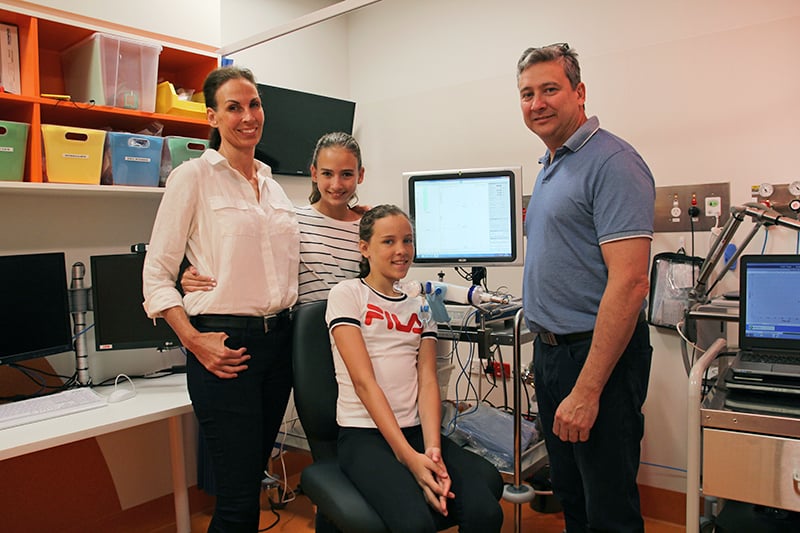
New drug therapy provides hope for kids with cystic fibrosisThe family of two girls with cystic fibrosis are hopeful after The Kids Research Institute Australia spin-off company, Respirion, receives $20 million in funding to develop a promising new therapy.
Research
Kids Easy Breathing StudyAs both bronchiolitis and bronchiectasis are diseases of the airway surface, we will comprehensively study the airway surface and factors affecting the airway surface in infants hospitalised with bronchiolitis.
Research
Premedication with salbutamol prior to surgery does not decrease the risk of perioperative respiratory adverse events in school-aged childrenPremedication with salbutamol to children prior to their surgery did not reduce their risk of Perioperative respiratory adverse events
Research
Boosting airway T-regulatory cells by gastrointestinal stimulation as a strategy for asthma controlThe hallmark of atopic asthma is transient airways hyperresponsiveness (AHR) preceded by aeroallergen-induced Th-cell activation.

News & Events
Promising results for new Western Australian-pioneered cystic fibrosis drugChildren with cystic fibrosis will be included in the next phase of a clinical trial of a promising new treatment pioneered in Western Australia aimed at boosting their immune responses to infections. Originally developed by researchers at The Kids Research Institute Australia and Perth Children’s Hospital.
Research
Identification of genes differentially regulated by vitamin D deficiency that alter lung pathophysiology and inflammation in allergic airways diseaseVitamin D deficiency exacerbates house dust mite-induced inflammation and alterations in lung structure and function
Research
Genome-wide association study identifies peanut allergy-specific loci and evidence of epigenetic mediation in US childrenFood allergy (FA) affects 2%-10% of US children and is a growing clinical and public health problem.