
Search
Showing results for "1"
Research
Hand function development of children with hemiplegic cerebral palsy: A scoping reviewHemiplegic cerebral palsy (hCP) typically impacts sensorimotor control of the hand, but comprehensive assessments of the hands of children with hCP are relatively rare. This scoping review summarizes the development of hand function for children with hCP.
Research
WALLABY Pre-pilot Survey: The Effects of Tidal Interaction on Radial Distribution of Color in Galaxies of the Eridanus SupergroupWe study the tidal interaction of galaxies in the Eridanus supergroup, using H i data from the pre-pilot survey of the Widefield ASKAP L-band Legacy All-sky Blind surveY.
Research
Comprehensive Testing of Chemotherapy and Immune Checkpoint Blockade in Preclinical Cancer Models Identifies Additive CombinationsAntibodies that target immune checkpoints such as cytotoxic T lymphocyte antigen 4 (CTLA‐4) and the programmed cell death protein 1/ligand 1 (PD-1/PD-L1) are now a treatment option for multiple cancer types. However, as a monotherapy, objective responses only occur in a minority of patients. Chemotherapy is widely used in combination with immune checkpoint blockade (ICB). Although a variety of isolated immunostimulatory effects have been reported for several classes of chemotherapeutics, it is unclear which chemotherapeutics provide the most benefit when combined with ICB.
News & Events
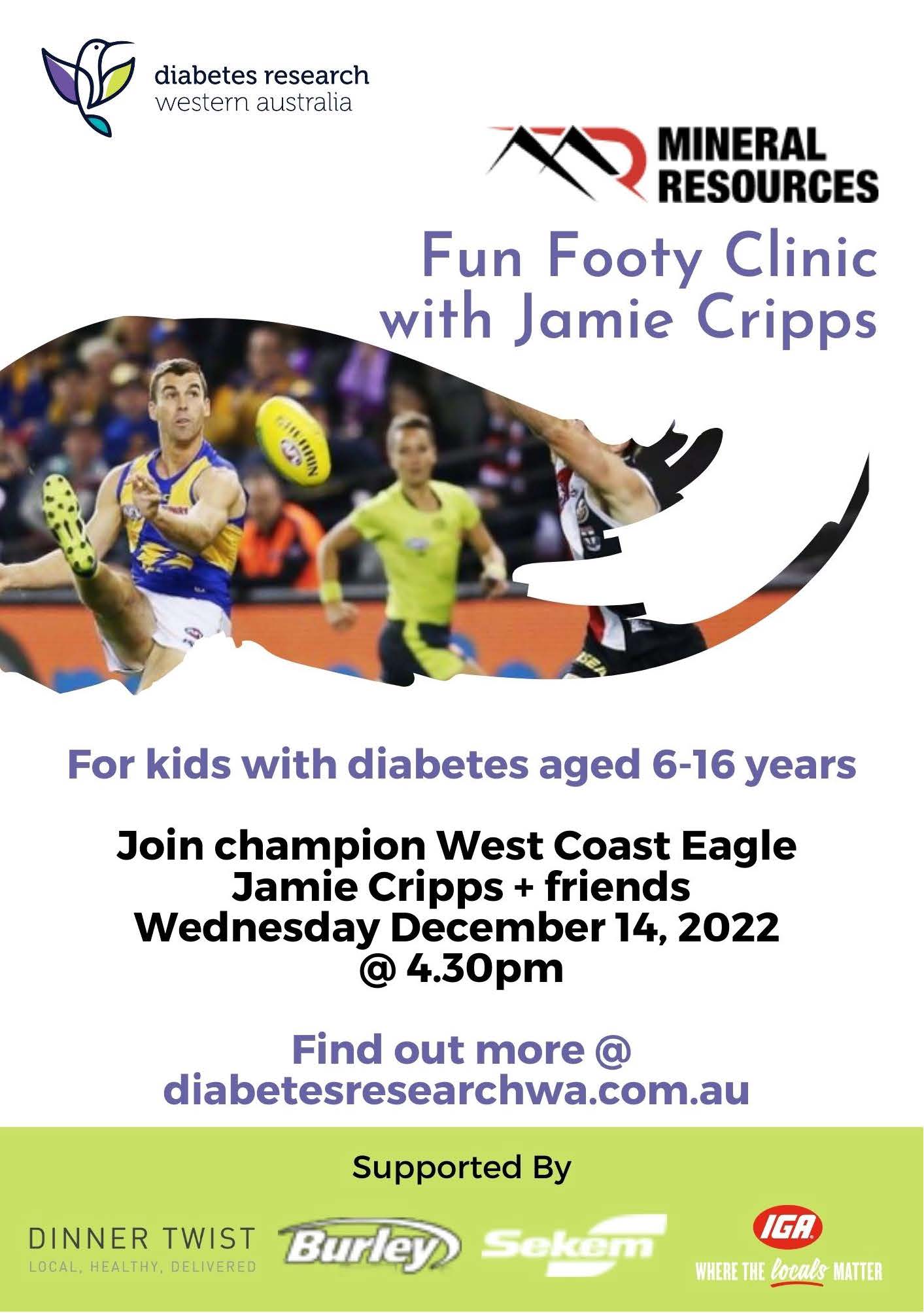
Crippa's Footy ClinicDiabetes Research Western Australia (DRWA) are inviting children aged 6-16 living with type 1 and type 2 diabetes to join West Coast Eagles forward Jamie Cripps for a fun-filled footy clinic.

News & Events
Oscar Hogan - How my brother living with T1D influenced my careerWe spoke to Oscar and asked him to share his story about the challenges he faces when trying to support his brother, joining the Centre as a student and what T1D research means to him, his brother and his family.

News & Events
Should I send my child to school?With Term 2 commencing this week, many parents are unsure as to whether to send their child with type 1 diabetes back to school. To assist parents with their own decision-making process, it is important to consider the individual risks and benefits for each family.
Research
Intranasal Insulin Trial IIIf successful, this vaccine could prevent type 1 diabetes and the need for daily insulin injections in people at risk.
News & Events
Diabete$ Re$earch in Au$traliaIt may surprise you to know that the Australian government has invested almost $300 million dollars since 2000 towards research and clinical trials for diabetes
Read about the Research Focus Area Leads at the Children's Diabetes Centre.

News & Events
Self-efficacy groups 2020Perth Children’s Hospital’s Diabetes Service has released the dates for its self-efficacy groups for 2020.