Skip to content
The Kids Research Institute Australia logo
Donate

No results yet

Search

Research

Impact of climate change on diarrhoea risk in low- and middle-income countries

Diarrhoea remains a leading cause of mortality among children under five years of age, with over 99 % of deaths occurring in low- and middle-income countries. Poor water quality, inadequate sanitation, poverty, undernutrition, and limited healthcare access contribute to this lingering problem, together with emerging environmental stressors driven by climate change.

Research

Beyond Seizures as an Outcome Measure: A Global Severity Scoring System for CDKL5 Deficiency Disorder

CDKL5 deficiency disorder (CDD) is a rare developmental and epileptic encephalopathy (DEE) associated with multiple impairments and comorbidities. Outcome measures for disease-modifying clinical trials for DEEs should measurably capture a spectrum of caregiver priorities and be externally validated.

Research

Healthy skin for children and young people with skin of colour starts with clinician knowledge and recognition

Skin conditions most frequently encountered in paediatric practice include infections, infestations, atopic dermatitis, and acne. Skin of colour refers to skin with increased melanin and darker pigmentation, and reflects global racial and ethnic diversity. 

Research

Interleukin-4 modulates type I interferon to augment antitumor immunity

Despite advances in immunotherapy, metastatic melanoma remains a considerable therapeutic challenge due to the complexity of the tumor microenvironment. Intratumoral type I interferon (IFN-I) has long been associated with improved clinical outcomes. However, several IFN-I subtypes can also paradoxically promote tumor growth in some contexts. 

Research

Incidence of cognitive errors in difficult airway management: an inference human factors study from the Pediatric Difficult Intubation Registry

Cognitive errors are known contributors to poor decision-making in healthcare. However, their incidence and extent of their contribution to negative outcomes during difficult airway management are unknown. We aimed to identify cognitive errors during paediatric difficult airway management using data from the Pediatric Difficult Intubation (PeDI) registry, to determine patient and clinician factors associated with these errors, and their contribution to complications.

Research

A call to action: the second Lancet Commission on adolescent health and wellbeing

Adolescents are the future leaders of our world. Ensuring their health and wellbeing—now and in the future—is one of the strongest mechanisms available to safeguard the collective future of humanity and to secure a more just society and a healthier and more productive planet. 

Research

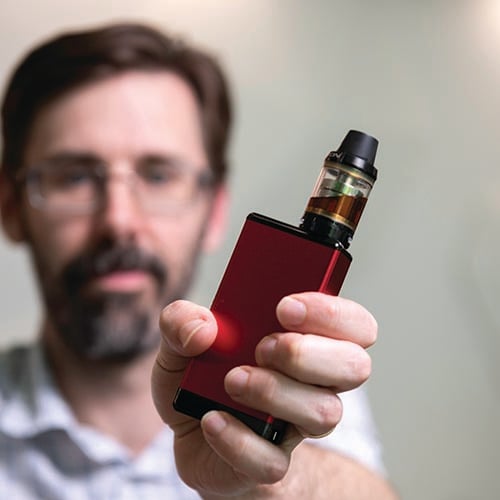
National E-cigarette Monitoring and Evidence Consortium: Supporting informed research, policy and practice in Australia

Alexander Larcombe BScEnv (Hons) PhD Honorary Research Fellow Honorary Research Fellow Associate Professor Alexander Larcombe began work at The Kids

Research

Strategies to Improve Research Participation By Older People With Cognitive Impairment: A Systematic Review

Older people with cognitive impairment are unrepresented in clinical research. Our objective was to review evidence for strategies to support their research inclusion and participation.

Research

Lifting the wellbeing of adolescents and young adults with type 1 diabetes: A feasibility study of the LIFT app

Adolescents and young adults with type 1 diabetes have an increased risk of psychological distress. To address this, psychological support provided asynchronously via an app may be feasible. Our study aimed to explore feasibility and safety of the LIFT wellbeing app.

Research

Therapeutic development to accelerate malaria control through intentional intervention layering

The clinical development of novel vaccines, injectable therapeutics, and oral chemoprevention drugs has the potential to deliver significant advancements in the prevention of Plasmodium falciparum malaria. These innovations could support regions in accelerating malaria control, transforming existing intervention packages by supplementing interventions with imperfect effectiveness or offering an entirely new tool.