
Search
Showing results for "1"
Research
Development of a Model of Care resource for FASD in the justice systemThis article describes the development of a Model of Care resource to support youth involved with the justice system where a neurodevelopmental disability such as Fetal Alcohol Spectrum Disorder is suspected. Service staff within the Youth Justice sector were engaged in an iterative process of resource development over a 9-month period.
Research
A snapshot of consumer engagement in clinical trials in Australia: results of a national survey of clinical trial networks and research organisationsLittle is known about the extent, perceptions or experiences of consumers involved in clinical trials across Australia. The purpose of this National study was to better understand the activity and perceptions of clinical trial networks (CTNs), research co-ordinating centres and their consumers, around consumer involvement in clinical trials.
Research
Differential cell counts using center-point networks achieves human-level accuracy and efficiency over segmentationDifferential cell counts is a challenging task when applying computer vision algorithms to pathology. Existing approaches to train cell recognition require high availability of multi-class segmentation and/or bounding box annotations and suffer in performance when objects are tightly clustered.

News & Events
Kids have a 'wild' time at diabetes campKids living with type 1 diabetes got to hang out with peers and have a lot of fun at the Diabetes WA and Perth Children’s Hospital kids’ camp in Bicton recently.
News & Events
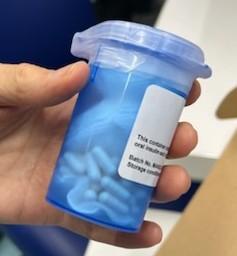
Oral insulin studyDiabetes researchers from Perth Children’s Hospital would like to find out whether oral insulin is useful in T1D management and is safe for use in individuals with T1D. They are looking for participants aged 16 – 25 years to be involved in their Oral Insulin 12-week study.
News & Events
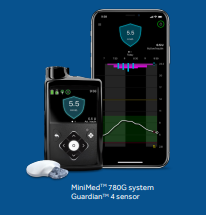
Guardian 4 sensorThe Guardian 4 sensor have recently been approved by the Therapeutic Goods Administration for use in Australia.
Research
Quantifying malaria acquired during travel and its role in malaria elimination on Bioko IslandMalaria elimination is the goal for Bioko Island, Equatorial Guinea. Intensive interventions implemented since 2004 have reduced prevalence, but progress has stalled in recent years. A challenge for elimination has been malaria infections in residents acquired during travel to mainland Equatorial Guinea.
News & Events
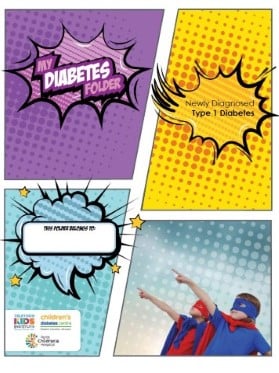
Check out our new patient folderCheck out our new and improved patient folder - a comprehensive resource to help families navigate a new type 1 diabetes diagnosis, now and into the future.
Research
Global, regional, and national life expectancy, all-cause mortality, and cause-specific mortality for 249 causes of death, 1980–2015Globally, life expectancy from birth increased from 61·7 years in 1980 to 71·8 years in 2015