
Search
News & Events
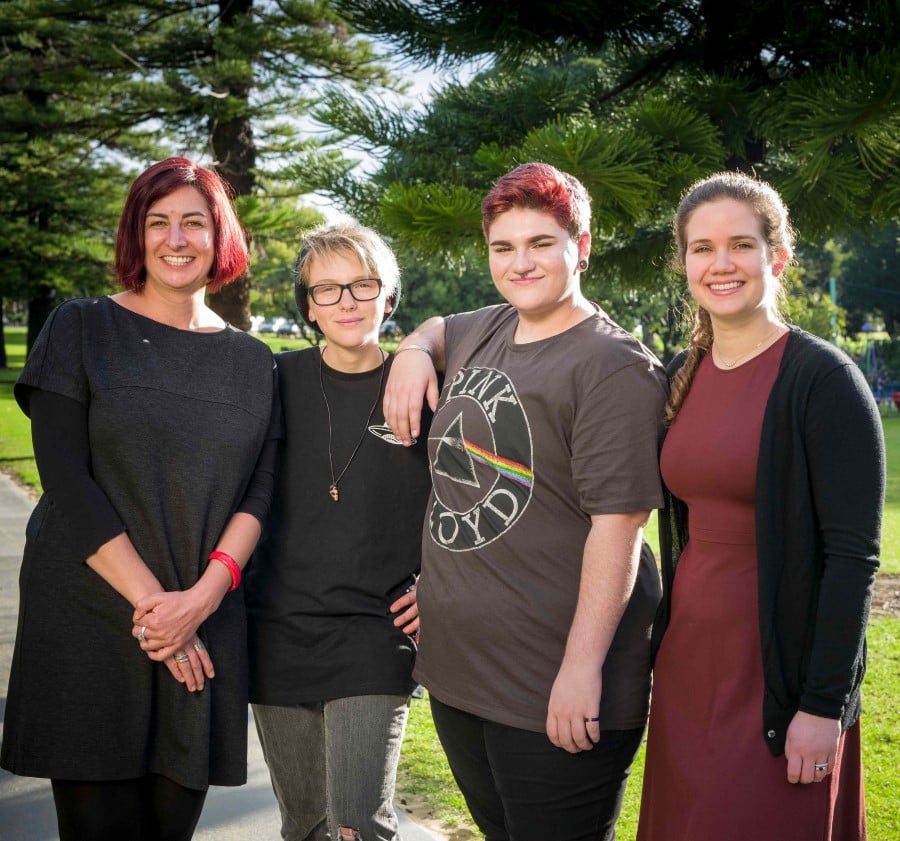
Trans Pathways provides evidence base to improve mental health of Trans YouthA ground-breaking survey by The Kids researchers has become the new reference point to guide policy change and educate health providers to better support trans and gender-diverse youth in Australia.

News & Events
Directing immune development to curb sky-rocketing diseaseOnce upon a time it was infectious diseases like polio, measles or tuberculosis that most worried parents. With these threats now largely under control, parents face a new challenge – sky-rocketing rates of non-infectious diseases such as asthma, allergies and autism.

News & Events
Trans young people can benefit from puberty suppressionA major review by WA researchers has found medication used to suppress puberty can improve the mental health of young people who are trans or gender diverse.
Research
Vaccinating young adults against HPV: the importance of understanding health decision-making and behaviourVaccination of young teenage females against human papillomavirus (HPV) with a newly licenced quadrivalent vaccine designed to prevent cervical cancer and...
Research
Cannabidiol for at risk for psychosis youth: A randomized controlled trialNo biological treatment has been firmly established for the at-risk stage of psychotic disorder. In this study we aim to test if subthreshold psychotic symptoms can be effectively treated with cannabidiol (CBD), a non-psychoactive compound of the plant Cannabis sativa.
Research
Decoding Susceptibility to Respiratory Viral Infections and Asthma Inception in ChildrenHuman Respiratory Syncytial Virus and Human Rhinovirus are the most frequent cause of respiratory tract infections in infants and children and are major triggers of acute viral bronchiolitis, wheezing and asthma exacerbations.
Research
Options and realities for trans and gender diverse young people receiving care in Australia's mental health system: findings from Trans PathwaysTrans and gender diverse young people experience mental health difficulties self-harm and suicidality at markedly higher rates than the general population, yet they often feel isolated from mental health services. There is little qualitative research on the experiences of trans and gender diverse young people accessing mental health support in Australia.
Research
Development of a Self-Harm Monitoring System for VictoriaThe prevention of suicide and suicide-related behaviour are key policy priorities in Australia and internationally. The World Health Organization has recommended that member states develop self-harm surveillance systems as part of their suicide prevention efforts. This is also a priority under Australia's Fifth National Mental Health and Suicide Prevention Plan. The aim of this paper is to describe the development of a state-based self-harm monitoring system in Victoria, Australia. In this system, data on all self-harm presentations are collected from eight hospital emergency departments in Victoria. A natural language processing classifier that uses machine learning to identify episodes of self-harm is currently being developed.
Research
Associations Between Developmental Risk Profiles, Mental Disorders, and Student Absences Among Primary and Secondary Students in AustraliaThis study assessed if the association between mental disorders and higher student absences varies across different profiles of risk factors, and estimated the proportion of student absences associated with mental disorders. Data included responses from a nationally representative Australian survey of child and adolescent mental health.
Research
Maternal and paternal mental health problems and the risk of offspring depression in late adolescence: findings from the Raine studyThere are limited studies on the risk of depressive symptoms in adolescent offspring exposed to parental mental health problems in middle childhood. We investigated the association between parental mental health problems, particularly paternal emotional problems and maternal symptoms of anxiety and depression, and the risk of depressive symptoms in adolescent offspring aged 17.