Skip to content
The Kids Research Institute Australia logo
Donate

No results yet

Search

Research

Qualitative assessment of healthy volunteer experience receiving subcutaneous infusions of high-dose benzathine penicillin G (SCIP) provides insights into design of late phase clinical studies

Secondary prophylaxis to prevent rheumatic heart disease (RHD) progression, in the form of four-weekly intramuscular benzathine benzylpenicillin G (BPG) injections, has remained unchanged since 1955. Qualitative investigations into patient preference have highlighted the need for long-acting penicillins to be delivered less frequently, ideally with reduced pain.

Research

Short Message Service Reminder Nudge for Parents and Influenza Vaccination Uptake in Children and Adolescents with Special Risk Medical Conditions: The Flutext-4U Randomized Clinical Trial

Children with chronic medical conditions are at increased risk of severe influenza. Uptake of influenza vaccination in children and adolescents with these identified special risk medical conditions is suboptimal.

Research

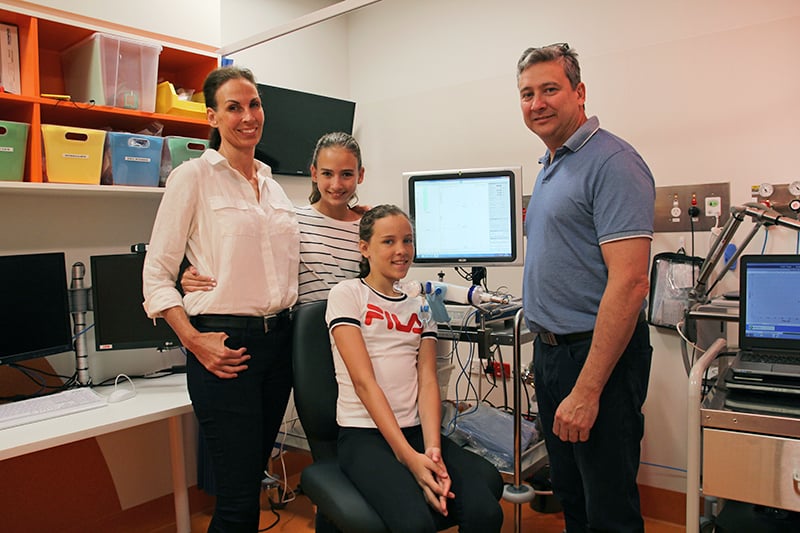
No association between in utero exposure to emissions from a coalmine fire and post-natal lung function

Studies linking early life exposure to air pollution and subsequent impaired lung health have focused on chronic, low-level exposures in urban settings. We aimed to determine whether in utero exposure to an acute, high-intensity air pollution episode impaired lung function 7-years later.

Research

Blinatumomab Added to Chemotherapy in Infant Lymphoblastic Leukemia

KMT2A-rearranged acute lymphoblastic leukemia (ALL) in infants is an aggressive disease with 3-year event-free survival below 40%. Most relapses occur during treatment, with two thirds occurring within 1 year and 90% within 2 years after diagnosis. Outcomes have not improved in recent decades despite intensification of chemotherapy.

Research

The effect of CFTR modulators on structural lung disease in cystic fibrosis

Newly developed quantitative chest computed tomography (CT) outcomes designed specifically to assess structural abnormalities related to cystic fibrosis (CF) lung disease are now available. CFTR modulators potentially can reduce some structural lung abnormalities. We aimed to investigate the effect of CFTR modulators on structural lung disease progression using different quantitative CT analysis methods specific for people with CF (PwCF).

Research

The Platform trial In COVID-19 vaccine priming and BOOsting (PICOBOO) booster vaccination substudy protocol

Coronavirus-2019 (COVID-19) vaccination in Australia commenced in February 2021. The first vaccines recommended for use were AZD1222 and BNT162b2, both delivered as a two-dose primary schedule. In the absence of sustained immunity following immunisation, recommendations for booster vaccination have followed. It is likely that periodic boosting will be necessary for at least some Australians, but it is unknown what the optimal booster vaccines and schedules are or for whom vaccination should be recommended. 

Research

Management of patients with diffuse intrinsic pontine glioma in Australia and New Zealand: Australian and New Zealand Children's Haematology/Oncology Group position statement

The main mission of the Australian and New Zealand Children's Haematology and Oncology Group is to develop and facilitate local access to the world's leading evidence-based clinical trials for all paediatric cancers, including brain tumours, as soon as practically possible. 

Research

Investigating Parental Observations of Early Autism Development in Simplex and Multiplex Families

Past research has highlighted the importance of early identification of developmental differences to improve targeted access to early interventions or supports. As such, it is of particular importance in the context of children at elevated likelihood of autism (such as where an older sibling has a diagnosis of autism), to better understand when and which early concerns are important as predictors of which children will benefit from pre-diagnostic supports.

Research

Characterization of invasive Group B Streptococcus isolates from Western Australian infants, 2004-2020

Invasive Group B Streptococcus remains a leading cause of infant morbidity and mortality. Intrapartum antibiotic prophylaxis has been implemented in many countries with a reduction in early-onset disease, but an effective vaccine may further reduce the disease burden. Candidate vaccines targeting capsular polysaccharides and surface proteins are now in clinical trials. 

Research

Treatment with inhaled aerosolised ethanol reduces viral load and potentiates macrophage responses in an established influenza mouse model

Treatment options for viral lung infections are currently limited. We aimed to explore the safety and efficacy of inhaled ethanol in an influenza-infection mouse model.